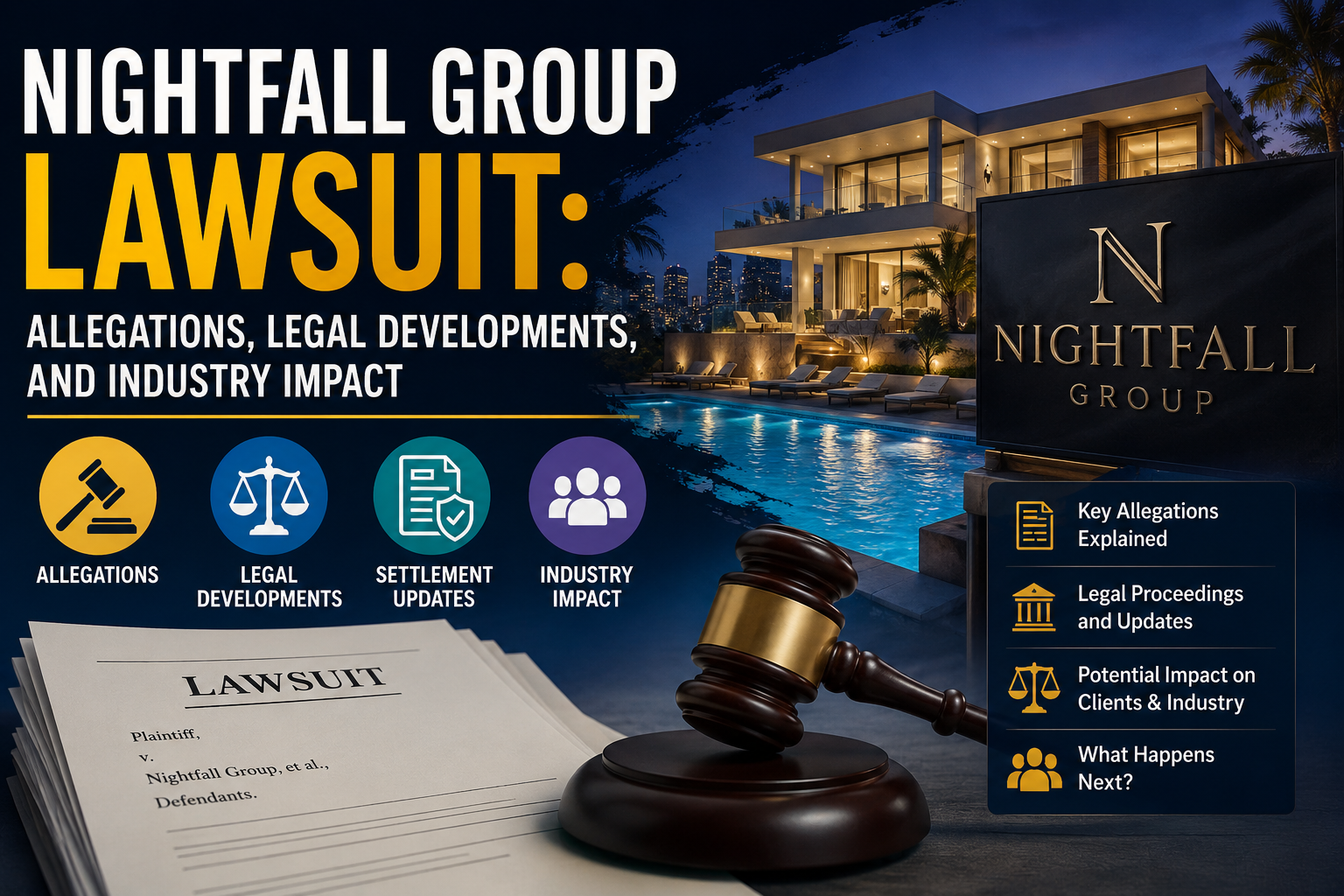
The nightfall group lawsuit is a civil enforcement case filed by the Los Angeles City Attorney against The Nightfall Group and related entities over alleged violations of short-term rental laws. The case gained attention because it involves luxury villa rentals, party house allegations, neighborhood complaints, and strict city housing regulations.
The lawsuit is not a criminal case. Instead, it is a regulatory enforcement action focused on whether certain rental properties were operated legally under Los Angeles housing and zoning rules. As of 2026, parts of the case have been settled, while other portions remain active in court.
What Is Nightfall Group?
Nightfall Group is a luxury concierge and villa rental company that offers high-end travel experiences, including luxury homes, event villas, concierge services, and VIP lifestyle arrangements. The company operates in premium rental markets where short-term luxury stays are in high demand.
The business model typically involves connecting property owners with short-term guests seeking luxury accommodations. This type of model is common in the high-end vacation rental industry but is also heavily regulated in cities like Los Angeles.
Why the Nightfall Group Lawsuit Was Filed
The lawsuit was filed in August 2023 by Los Angeles authorities as part of a broader crackdown on illegal short-term rentals and disruptive party houses.
City officials alleged that properties associated with the company were being used in ways that violated local rental laws, zoning restrictions, and residential housing protections.
Authorities claimed that these operations contributed to:
- Noise complaints
- Large unauthorized parties
- Frequent police responses
- Parking and traffic disruptions
- Neighborhood disturbances
- Commercial use of residential homes
Reports cited hundreds of police responses over time, which became a key point in the city’s enforcement action.
Key Allegations in the Nightfall Group Lawsuit
The lawsuit includes several major legal allegations tied to how properties were allegedly operated.
Illegal Short-Term Rental Operations
The central claim is that residential properties were used as commercial short-term rentals without proper licensing or legal approval under Los Angeles regulations.
Party House and Nuisance Claims
Authorities also alleged that some properties were used for large parties that created ongoing disturbances for nearby residents, including noise, crowding, and safety concerns.
Public Nuisance Violations
The city argued that repeated disruptive activity created a public nuisance affecting neighborhood quality of life and safety.
Unfair Business Practices
Another allegation is that operating outside regulatory frameworks may have given an unfair advantage compared to compliant rental operators.
Evidence Used in the Case
The city’s enforcement action relied on several types of evidence, including:
- Resident complaints
- Police response records
- Property monitoring reports
- Zoning and permit investigations
One widely reported claim is that law enforcement responded to some related properties hundreds of times over a two-year period, which strengthened the city’s argument for ongoing nuisance activity.
Settlement Updates in the Lawsuit
In 2025, parts of the lawsuit were resolved through settlements involving several defendants connected to property ownership or management.
Reported settlement amounts included:
- $215,000 paid by one defendant
- $45,000 paid by another entity
- $20,000 paid by a third party
These settlements typically included compliance requirements and restrictions on future rental operations.
However, the settlements did not end the entire case. Other defendants and claims reportedly remained active in court.
Current Status of the Case (2026)
As of 2026, the Nightfall Group lawsuit remains partially ongoing.
- Some defendants have settled
- Some claims are resolved
- Remaining litigation continues against certain parties
The case has not reached a final universal resolution for all defendants, meaning it is still an active legal matter in parts of the court system.
Other Legal Disputes Linked to Nightfall Group
In addition to the Los Angeles enforcement case, there have been other disputes involving payments, vendors, and business operations in the luxury rental ecosystem.
These types of disputes are common in high-value hospitality businesses where multiple service providers, property owners, and intermediaries are involved.
Why the Lawsuit Matters
The Nightfall Group lawsuit is important because it reflects a wider trend in how cities regulate short-term rentals.
Stricter Regulation of Luxury Rentals
Cities like Los Angeles are increasing enforcement against:
- Illegal short-term rentals
- Party house operations
- Zoning violations
- Unlicensed commercial use of homes
Impact on Property Owners
Property owners working with rental management companies may now face greater responsibility for ensuring full legal compliance.
Impact on Guests and Travelers
Guests may face risks such as:
- Booking cancellations
- Loss of deposits
- Last-minute regulatory shutdowns
- Uncertainty around property legality
Lessons from the Nightfall Group Lawsuit
Always Verify Legal Compliance
Before booking a luxury rental, ensure it is legally permitted for short-term stays in that city.
Read All Terms Carefully
Understand refund rules, cancellation policies, and usage restrictions before paying deposits.
Keep Written Records
Maintain documentation such as:
- Contracts
- Payment receipts
- Booking confirmations
- Email communications
Understand Local Rental Laws
Short-term rental rules vary widely by city, especially in major urban areas with strict housing regulations.
Frequently Asked Questions
What is the Nightfall Group lawsuit about?
It is a civil enforcement case alleging illegal short-term rental operations and party house activity linked to properties associated with The Nightfall Group in Los Angeles.
Is it a criminal case?
No. It is a civil regulatory enforcement action focused on compliance and penalties.
Did Nightfall Group admit wrongdoing?
Settlements reported in the case generally do not include admissions of liability.
Is the lawsuit over?
No. Some parts have been settled, but other portions remain ongoing as of 2026.
Why did the lawsuit happen?
It was filed due to alleged violations of short-term rental laws, zoning rules, and nuisance complaints.
Conclusion
The nightfall group lawsuit highlights the growing tension between luxury short-term rental businesses and city regulators enforcing housing and zoning laws. While parts of the case have been resolved through settlements, other claims remain active, making it an ongoing legal matter.
The case serves as a reminder that luxury rental operations must comply strictly with local laws, and both businesses and travelers should prioritize legal transparency, documentation, and due diligence before engaging in high-value rental transactions.