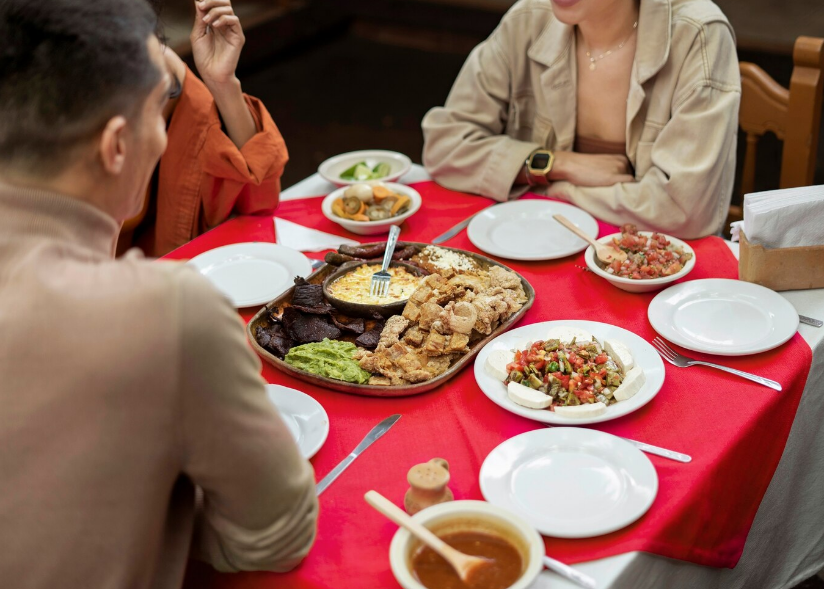
I didn’t go to Chamba expecting the food to be one of the most memorable. I had arrived thinking about temples, old streets, mountain views and the Ravi River. Food was somewhere much lower on my list. I assumed I would eat whatever was convenient between sightseeing stops and carry on with the day. That changed after my first proper meal.
The food was warm, filling and full of the sort of flavours that made me want another helping before I had even finished. After that, I started paying more attention to what people were eating around me, asking about dishes and stopping at places that looked busy. By the time I left, I had a small list of things I would happily order again.
I kept coming back to Chamba’s Himachali Rajma
Rajma wasn’t exactly an unfamiliar dish to me, but the version I ate in Chamba felt different from the rajma I usually have at home. The beans were cooked slowly in a thick, flavourful gravy and served with rice, making it exactly the kind of meal I wanted after walking around town for hours. The spices weren’t overwhelming, and the whole dish had a deep, comforting taste. I remember thinking that this was the kind of food I could eat again without getting tired of it.
Madra was the Chamba dish I didn’t expect to like so much
Madra was another dish that caught my attention. It is traditionally made with ingredients such as chickpeas or other legumes cooked in a rich yoghurt-based gravy, with spices giving it plenty of flavour. I expected something heavy, but the balance of the yoghurt and spices made it much more interesting than I had imagined.
I had it with rice and ended up taking my time with the meal. That seems to happen quite often with good local food. You start eating because you’re hungry and then slow down because you actually want to taste what is in front of you.
Dham made me understand why local food in Chamba is about more than one dish
Additionally, I wanted to sample Himachali dham, a traditional feast connected to festivals and special occasions.
I found it appealing that dham has multiple signature recipes. It was a dinner consisting of many preparations typically served together. The meals can change depending on the occasion and location, but the experience is just as much about the mix as it is about any one dish. Compared to just a single menu order, it felt completely different. Despite the diversity, everything still made sense. I can see why dham is so significant to Himachali cuisine.
Chamba’s sweets were an easy temptation
Naturally, I had to sample some of the regional sweets while visiting Chamba’s marketplaces. A preparation I was interested in was Mittha. It was far more fragrant than I had anticipated because it was made with sweetened rice and scented with dry fruits, cardamom, and saffron. When I tasted it after a meal, I realised right away why something sweet might be such a satisfying way to finish off a large plate of food.
Staying in the right part of Chamba made eating easier
I was glad I had chosen one of the hotels in Chamba close to the town centre. I didn’t have to organise a whole trip around the main market because I could simply go and stroll to eateries and neighbourhood food stores, eat, and then carry on visiting the city’s historic areas.
Final thoughts
I anticipated that the highlights of Chamba would be the temples and the surrounding mountains. However, I would gladly place another order for rajma and rice, schedule time for madra, try dham if the chance arises, and end a dinner with something sweet. Above all, though, I would repeat the intermittent eating pauses, such as tea, market snacks, and unplanned meals.


