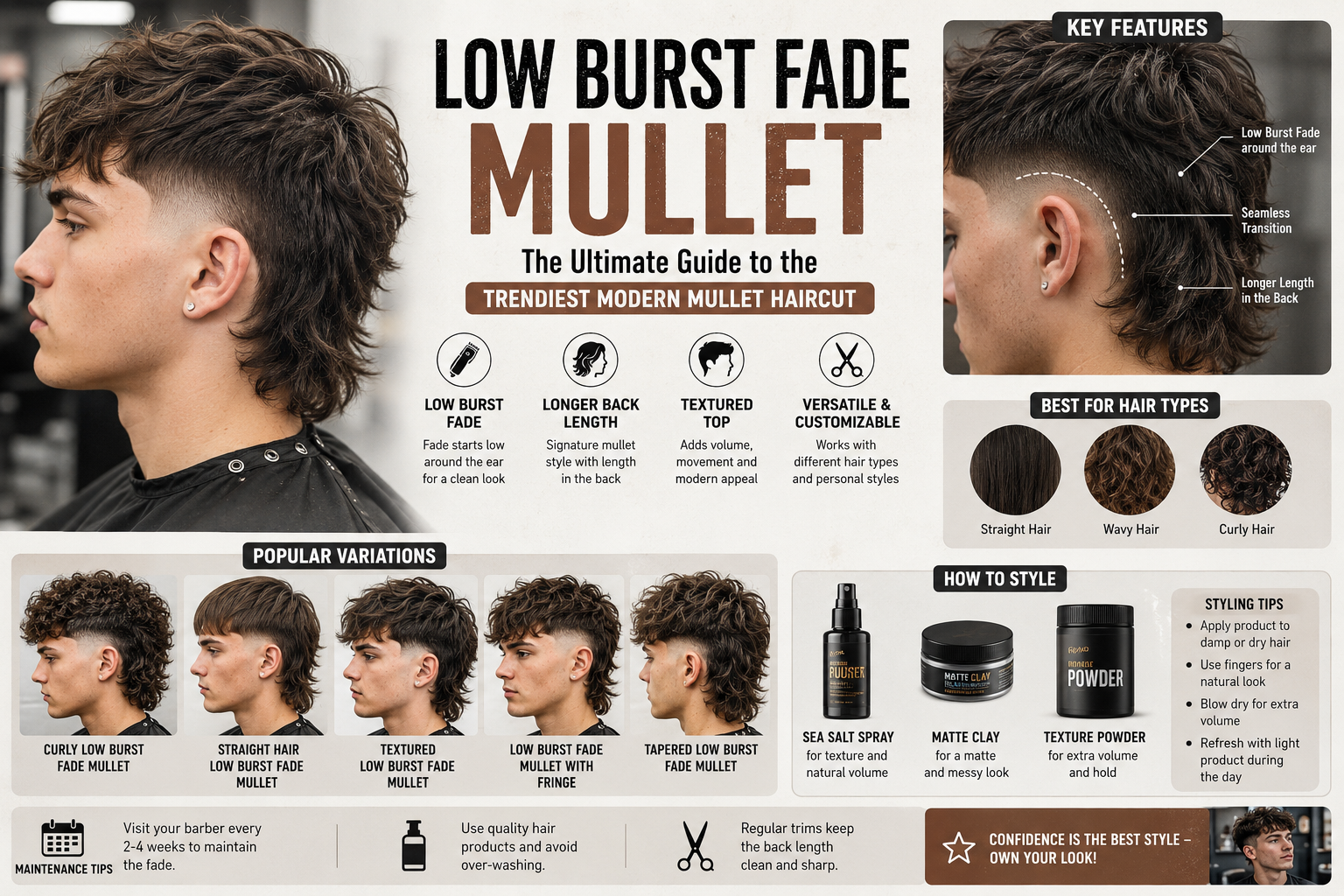
The low burst fade mullet has become one of the biggest men’s hairstyle trends in recent years. Once considered a retro look from the 1980s, the mullet has undergone a complete transformation, blending classic attitude with modern barbering techniques. The result is a hairstyle that looks fresh, stylish, and surprisingly versatile.
From athletes and musicians to social media creators and fashion enthusiasts, the low burst fade mullet has earned its place as one of the most requested cuts in barbershops around the world. The style combines clean fades with longer hair in the back, creating a look that is both edgy and wearable.
Whether you have straight, wavy, or curly hair, this haircut can be adapted to suit your personality and lifestyle. In this complete guide, you’ll learn everything about the low burst fade mullet, including popular variations, styling tips, maintenance advice, and how to ask your barber for the perfect cut.
What Is a Low Burst Fade Mullet?
A low burst fade mullet is a modern hairstyle that combines a low burst fade on the sides with the traditional longer length at the back associated with a mullet.
The burst fade creates a semi-circular fade around the ears, while the low placement keeps the haircut subtle and clean. Unlike high fades that create dramatic contrast, a low burst fade offers a smoother transition that works well in both casual and professional settings.
The mullet portion keeps length at the back, giving the haircut its distinctive character. Modern versions often include textured layers and a more natural flow compared to classic mullets from previous decades.
Why Is the Low Burst Fade Mullet So Popular?
The growing popularity of this haircut isn’t an accident. Several factors have contributed to its rise in men’s fashion.
It Combines Vintage and Modern Styles
The mullet carries nostalgic appeal, while the burst fade adds a contemporary touch. This combination creates a hairstyle that feels unique without looking outdated.
It Works for Different Hair Types
One of the biggest advantages of a low burst fade mullet is its versatility. It works well with:
- Straight hair
- Wavy hair
- Curly hair
- Thick hair
- Coarse hair
This flexibility makes it accessible to a wide range of people.
It Offers Endless Customization
No two mullets have to look exactly alike. You can personalize the haircut by adjusting:
- The fade length
- The top texture
- The length in the back
- The fringe style
- The overall volume
This level of customization allows the hairstyle to reflect individual personality.
Social Media Has Accelerated the Trend
TikTok, Instagram, and YouTube have helped transform the modern mullet into a mainstream trend. Barbers regularly showcase creative variations that inspire millions of viewers and encourage people to try the look themselves.
Key Features of a Low Burst Fade Mullet
Understanding the main elements of this hairstyle helps when deciding if it’s the right choice for you.
The Low Burst Fade
The fade starts lower around the ears, creating a softer and more natural transition. This makes the haircut less extreme and easier to maintain.
Longer Hair in the Back
The signature mullet feature remains intact. The back can be short, medium, or long depending on personal preference.
Textured Layers on Top
Modern mullets often include textured layers that create movement and volume. This prevents the haircut from looking flat or outdated.
Natural Styling
Most low burst fade mullets embrace a relaxed, effortless appearance rather than heavily styled, polished looks.
Popular Low Burst Fade Mullet Styles
There are many ways to wear this trendy haircut.
Curly Low Burst Fade Mullet
Curly hair naturally enhances the mullet’s shape and texture. The curls add volume while the burst fade keeps the sides clean and controlled.
This variation has become extremely popular among younger men because it requires relatively little daily styling.
Straight Hair Low Burst Fade Mullet
Straight hair creates sharper lines and a more defined silhouette. This version often emphasizes precision cutting and clean transitions.
Regular trims help maintain the structured appearance.
Wavy Low Burst Fade Mullet
Wavy hair offers the perfect balance between texture and manageability. Natural waves create movement without requiring excessive styling products.
Many people find this variation to be one of the easiest to maintain.
Textured Low Burst Fade Mullet
Textured cuts remain one of the biggest trends in men’s grooming. Adding layers and texture creates a modern, lived-in look that feels effortlessly stylish.
Barbers often use point-cutting techniques to achieve this effect.
Low Burst Fade Mullet With Fringe
Adding a fringe introduces another layer of personality to the haircut. Popular fringe options include:
- Messy fringe
- Curly fringe
- Textured bangs
- Choppy front layers
The result is a youthful and fashion-forward style.
Who Should Get a Low Burst Fade Mullet?
This hairstyle suits a surprisingly broad range of face shapes and personalities.
Best Face Shapes
Several face shapes work particularly well with the cut.
Oval Faces
Oval faces can wear almost any hairstyle successfully, including every variation of the low burst fade mullet.
Square Faces
Strong jawlines complement the structure and texture of this haircut beautifully.
Round Faces
Extra height on top helps elongate the face and create better balance.
Heart-Shaped Faces
The longer back section offsets wider foreheads and creates visual harmony.
Ideal Hair Types
The hairstyle works best with:
- Thick hair
- Medium-density hair
- Curly textures
- Natural waves
People with fine hair can still enjoy the look, although additional styling products may be needed to create volume.
How to Ask Your Barber for a Low Burst Fade Mullet
Clear communication helps ensure great results.
You can tell your barber:
“I want a low burst fade around the ears with a modern mullet in the back and plenty of texture on top.”
You should also discuss:
Fade Length
Options include:
- Skin fade
- Number one fade
- Tapered fade
Back Length
Decide whether you prefer:
- A subtle modern mullet
- Medium length
- A longer traditional look
Texture Preferences
Mention whether you want:
- Heavy texture
- Soft layering
- Natural movement
- A messy finish
Bringing reference photos is always a good idea because visual examples eliminate confusion.
How to Style a Low Burst Fade Mullet
Styling depends on your hair type and desired appearance.
Styling Straight Hair
Use lightweight products such as:
- Matte clay
- Texture powder
- Styling cream
Apply product to slightly damp hair and use your fingers to create natural movement.
Styling Curly Hair
Curly mullets benefit from:
- Curl creams
- Leave-in conditioners
- Sea salt sprays
These products maintain definition without making the hair stiff or crunchy.
Styling Wavy Hair
Wavy hair typically requires minimal effort.
A simple routine includes:
- Applying sea salt spray.
- Letting the hair air dry.
- Using fingers to add texture.
Adding More Volume
If you want extra volume, use a blow dryer and a lightweight mousse to lift the roots.
This creates the modern, textured appearance that many people prefer.
Best Products for a Low Burst Fade Mullet
Using the right products makes a significant difference.
Matte Clay
Matte clay provides hold and texture without excessive shine.
Sea Salt Spray
Sea salt spray enhances natural movement and creates a relaxed, beach-inspired finish.
Texture Powder
Texture powder adds volume while maintaining a lightweight feel.
Curl Cream
Curly hair benefits from moisturizing products that improve definition and reduce frizz.
Choosing products based on your hair type ensures the best results.
Maintenance Tips for a Low Burst Fade Mullet
Like any fade haircut, regular maintenance is essential.
Visit Your Barber Frequently
Most people schedule appointments every:
- Two to three weeks for the fade
- Six to eight weeks for overall reshaping
This keeps the haircut looking fresh and intentional.
Avoid Overwashing
Washing your hair every day can remove natural oils and reduce texture.
Most barbers recommend shampooing two or three times per week.
Condition Regularly
Conditioning helps maintain healthy, manageable hair, especially for longer mullet sections.
Use Quality Styling Products
Investing in professional products improves both appearance and hair health over time.
Low Burst Fade Mullet vs Other Popular Hairstyles
Understanding the differences between similar cuts can help you make the right decision.
Low Burst Fade Mullet vs Traditional Mullet
Traditional mullets often feature longer sides and less blending.
The modern version offers:
- Cleaner fades
- Better structure
- Greater versatility
- A more contemporary appearance
Low Burst Fade Mullet vs Wolf Cut
Wolf cuts emphasize layers throughout the entire head.
Burst fade mullets focus more on:
- Defined side fades
- Classic mullet proportions
- Cleaner outlines
Both styles are fashionable, but they create different visual effects.
Low Burst Fade Mullet vs Taper Mullet
Taper mullets use softer transitions rather than dramatic fades.
Burst fades create stronger contrast and a bolder overall look.
Is the Low Burst Fade Mullet Professional?
Many people wonder if this hairstyle works in professional environments.
The answer largely depends on the specific version you choose.
A subtle low burst fade mullet with moderate length can look polished and stylish. Creative industries often embrace modern hairstyles, while more conservative workplaces may require shorter, cleaner variations.
Customization allows you to balance individuality with professionalism.
Why the Low Burst Fade Mullet Will Continue to Trend
The modern mullet revival shows no signs of slowing down.
Several factors contribute to its lasting popularity:
Increased Personal Expression
People increasingly use hairstyles to showcase individuality and confidence.
Greater Acceptance of Alternative Styles
Modern workplaces and social environments are more accepting of creative grooming choices.
Continuous Evolution
Barbers constantly develop new interpretations, keeping the trend fresh and exciting.
Because of this adaptability, the low burst fade mullet is likely to remain relevant for years to come.
Frequently Asked Questions
What is a low burst fade mullet?
A low burst fade mullet combines a low-positioned burst fade around the ears with longer hair at the back, creating a modern version of the classic mullet hairstyle.
How often should I get a low burst fade mullet trimmed?
Most people should visit their barber every two to four weeks to maintain the fade and every six to eight weeks for overall reshaping.
Does a low burst fade mullet work with curly hair?
Yes. Curly hair is one of the best textures for this style because natural volume and texture enhance the mullet’s appearance.
Is a low burst fade mullet suitable for work?
A subtle version can be appropriate for many workplaces, especially in creative industries or modern professional environments.
What products should I use for styling?
Popular options include matte clay, sea salt spray, texture powder, curl cream, and lightweight styling creams.
What’s the difference between a burst fade and a regular fade?
A burst fade curves around the ear in a circular pattern, while regular fades typically follow straighter lines along the sides and back.
Conclusion
The low burst fade mullet has successfully transformed one of history’s most recognizable hairstyles into a modern fashion statement. By combining clean barbering techniques with classic mullet elements, it offers a look that feels both nostalgic and contemporary.
Its versatility, adaptability, and strong sense of personality make it appealing to men of all ages and hair types. Whether you prefer a subtle, professional variation or a bold, attention-grabbing style, the low burst fade mullet can be tailored to fit your needs.
With the right barber, proper maintenance, and suitable styling products, this haircut can become a signature look that stands out for all the right reasons. As men’s grooming trends continue to evolve, the low burst fade mullet remains one of the most exciting and stylish choices available today.